The Covid-19 pandemic blew up everyone’s plans for… well, everything. In my adventure world, that meant athletic goals/races in particular. So in July of last year, I signed up for a challenge through my favourite 5 Peaks trail running series called the Virtual Canadian Crossing. Basically, you had one year – from Canada Day to Canada Day – to move your body the distance of crossing Canada: 4800km. I had a few friends sign up for the “on foot” version, which meant that they would have to complete the distance exclusively by running/walking. I knew there was no way I’d be able to rack up that kind of mileage as a single parent in a pandemic, so I signed up for the “multi-sport” version, meaning I could use any self-propelled activity to complete the challenge including cycling, cross-country skiing, paddling, etc. I had absolutely no idea if I could do it, 4800km was an unfathomable distance. It breaks down to averaging 13km/day for 365 days. That’s no mean feat! But I thought, what have I got to lose? We’ll see how far I get!
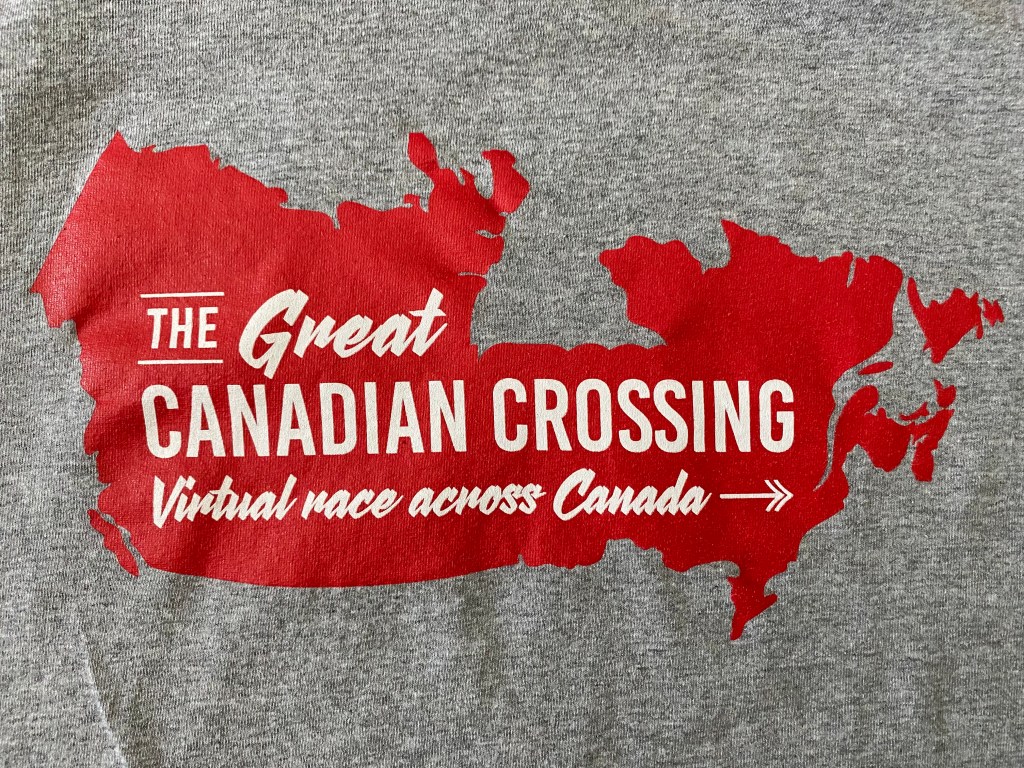
In order to track your progress, you have to link whatever app you use to track your activities to an app called Challenge Hound. I *thought* I did this, but sometime in September, I said to my best friend Janelle (who, btw did complete the challenge ON FOOT, ’cause she’s awesome) “hey, how do you know how far you are in the Great Canadian Crossing?” And she replied “you should be getting an email with an update about your progress every time you do something!”
Uh, I was definitely not getting updates. Something was clearly not right in the linking process. I made a mental note to look into it, reasoning that as long as I was signed up they’d have to count my activities whenever I managed to get it connected. It then fell to the bottom of the to-do list for (this is embarrassing) several more months. Around Christmas time, I started to stress about it. In fact, I think it was when my amazing sister-in-law Kirsten COMPLETED the multi-sport challenge, halfway through the year (because she’s so awesome, she’s training for Ironman), that was the kick in the pants I needed to actually get on my computer and look into it.
Finally, I managed to get Challenge Hound to sync to my Strava, but my total kilometres and number of activities was much lower than expected. Some further investigation revealed that the system was programmed to only “backfill” 60 days of activities. Now the end of January, that meant it was not counting FIVE MONTHS of activities. After several panicky emails to 5 Peaks, I finally got this fixed as well (thank goodness they let me still count everything!).
Then I received my first email, which read something along the lines of “Splendiferous work on your 9.6km run. You are -653km behind pace.”
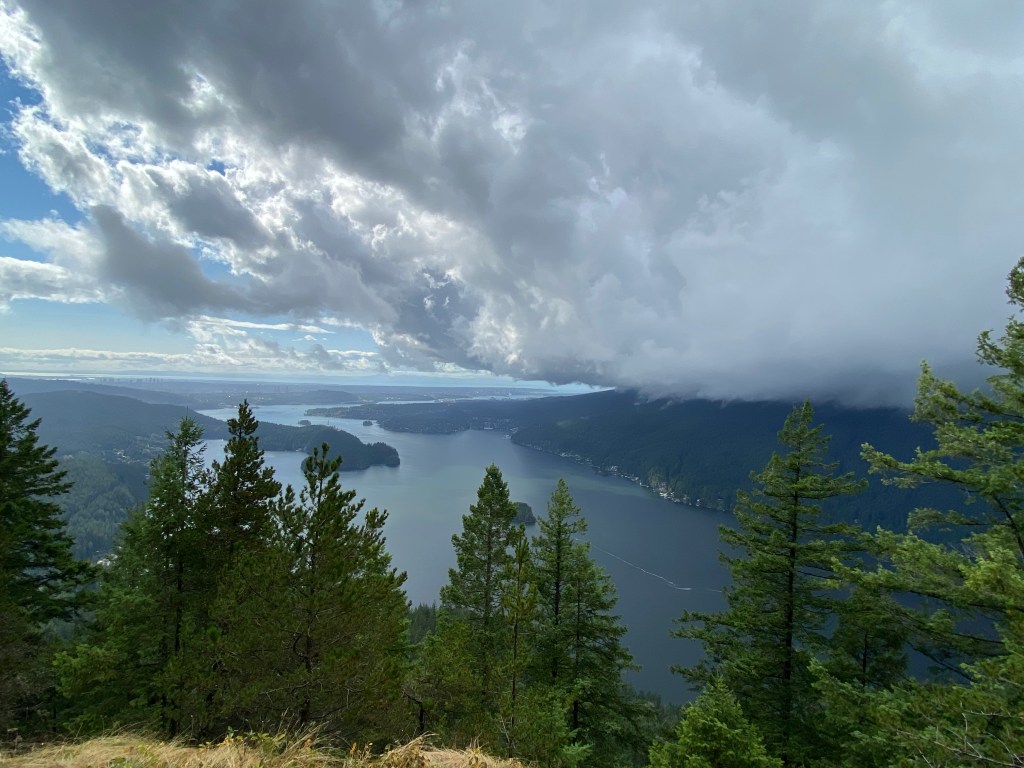
ACK! That’s a long way behind (I’m not even exaggerating). This should not have been so surprising. After last summer’s misadventures in mountain running (see my two previous blog posts), I got to explore some trails around Vancouver in September that resulted in a badly sprained ankle and several weeks off running and months of physio/rebuilding. Late fall brought its usual slump in motivation and strength work of any kind, so my mileage was even lower than normal for the last few months of the year.
Never fear, I had recently hatched a new goal for myself. I would be turning 42 this year, and since that is the distance of a marathon (in km), obviously I should run a marathon. It may surprise you to know that I’ve actually never run a marathon – not an official one anyway, despite having successfully completed several ultramarathons and many runs of similar distance. But New Year’s 2021 brought a bleak-looking quarantine and socially distanced-looking future. I wasn’t sure what there was to look forward to – usually I had plans for trips or races to motivate myself through the winter, but it seemed impossible to plan for any of that. So instead, I decided I would run a marathon-distance run every month of the year. And maybe, if Covid conditions allowed it at some point, an actual marathon.
January’s marathon hurt. I had done a few bigger runs in the 25k ballpark around Christmas time that had gone ok: my knee that gets achey was achey, my hips were tight, all of the usual winter running problems that tend to crop up every year when I start to increase my mileage again and haven’t got the strength training to go with it were there. For the third year in a row, I gave myself a stern speech about next year, doing better in the fall so this wouldn’t happen. But I assumed that like the past few years, eventually I would out-train and out-strengthen these issues as spring and summer approached.

Turns out I was wrong. But I kept on running. February’s marathon handed itself to me – my friend Jen planned a 38km run for her (yep, you guessed it) 38th birthday, so I tagged on to that one and added a few km by running circles around the others a few times and at one point in the day veering from the group to add a couple of km by myself.
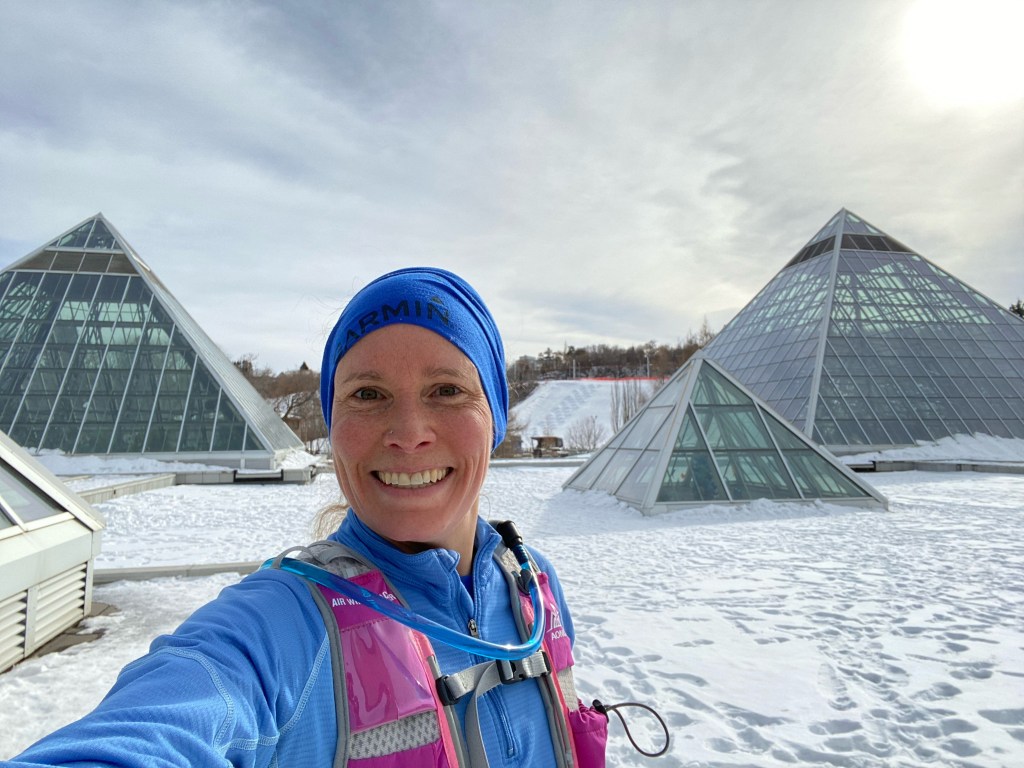
What this picture doesn’t show was how sore my grumpy knee was getting. Instead of settling down, it was getting more achey and the pain was getting sharper and in a new spot – upper left outside corner of the knee instead of the usual patellar femoral (kneecap) pain aka “runner’s knee” I’d been dealing with off and on for the past couple of years. I knew I should probably get this checked out, but life was busy, so I carried on.
Another really amazing run opportunity was in the works: my friend Tess was organizing a run circumnavigating Pigeon Lake. That’s right, on the ice! It was a roughly 50k loop, and though I originally thought maybe I’d do a marathon in March in addition to this run, by the time it was getting close I knew I’d have to count it and then go see my physiotherapist. At this point, every time I started to run, I was in pretty excruciating pain and having trouble not limping. However, usually after a few minutes, the pain would subside back to a manageable level and I’d be able to keep running.
The run around Pigeon Lake was amazing. And exhilarating, not always in a good way. The ice was still plenty thick, but sometimes the layers of freezing would shift underfoot and it would creak, and bubbles of liquid would move, and everything in my lizard brain would scream “NOT SAFE!!” This was more adrenaline than I really needed, and isn’t an experience I’m keen to repeat, but we completed the full loop and felt pretty satisfied with ourselves. There was also more beauty than you might expect:

The knee pain was more constant during this run and after. Still, I kept pushing. Just one more run, I told myself, knowing at this point that I wasn’t listening to my body and that probably my physiotherapist was going to yell at me. Not really, Tyler would never yell at anybody (half the time his voice is so soft I have to ask him to repeat himself), but I felt the guilt of defying imaginary orders and common sense all the same.
The “just one more run” (ha, I accidentally typed “fun” – that’s appropriate – “just one more fun”) was to tag along with a group of my friends who were tackling the “David Goggins challenge”: running 4 miles every 4 hours for 48 hours. Only they decided that wasn’t fun enough, so they were adding things like running mostly 10km laps instead of the equivalent 6.4km, many of them with themes. I joined in on a “rave run,” where, decked out in glow sticks and neon brights, we ran around downtown in the dark. This included going every which way in a scatter crosswalk and pumping rave tunes out of a speaker as we ran down Jasper Ave. It was so interesting to see people’s reactions: everything from incredulity to cheering to people who obviously thought they were missing out on something. It was pretty awesome. I did a couple more limpy runs with them over the course of the weekend, but I knew this was it. The pain was no longer going away while running and was now waking me up at night. I was going to have to take a break.
I finally went to physio and now, frightened by the pain level, followed instructions to the letter. No running for 3 full weeks, slow rebuild. I did my daily exercises faithfully. Unfortunately, 5 or 6 weeks later, I was back to the same place. I tried to do a short run with Trevor’s best friend for Trevor’s birthday, and had to walk half of it. I just couldn’t push through the pain. My lizard brain simply said “STOP” and I’d find myself hopping and limping, that part of my brain screaming not to put my foot down again. This was not healing.
My physio sent me for an MRI and then to a physician specializing in sports medicine. From the MRI results, we learned that there was some cartilage damage/degeneration in my knee. I thought that the origin of this had been a hard fall on my kneecap during my first official Ultramarathon race – the Black Spur 54k – but I recently checked my photos and that was the OTHER knee. So I don’t really know why it’s happened (frustrating), just that it’s not really fixable and something I’m going to have to learn to live with. I’ve had moderate success with getting an injection of something called hyaluronic acid, which was explained to me as being like an “oil change for the knee joint,” but it looks like my running future might not be what I had hoped it would be.
But what does this have to do with getting across Canada? Well, the better question is, what does all of this have to do with my mental health? Not running was initially a relief from pain, and I could take a few weeks to be mellow and go for walks and ride my bike on the trainer in the basement, which perfunctorily serves as “exercise” but just doesn’t confer the same emotional benefits. For awhile, this was ok. But as the weeks turned into months of low activity, I started to not do well. I’ve joked for years that running is my antidepressant, but I didn’t know for sure until now that it was actually true. By the beginning of May, I was having trouble getting out of bed in the morning. I’d get up moments before I’d have to wake my kids, scramble to get them ready and lunches packed, and take them to the bus stop still in my pajamas. It was the day I saw a client online without having showered or brushed my teeth, having only changed into a decent top (they can only see me from the chest up on my computer screen anyway) that the alarm bells got loud. I know lots of people did this during Covid lockdowns when working from home, but I never had. This was not a good sign.
I didn’t feel overly sad, but nor was I happy. I was blah. There seemed to be nothing to look forward to. I know a lot of people felt that as the pandemic dragged on this spring, but that wasn’t the whole issue. Running is also the centre of my social life, and I was becoming more and more out of the loop by not being able to join any group runs or go for long runs with my best friends so we could have those great, long, deep conversations that seem to happen better on the trails. My best friends were still checking in and even going for walks with me, but it just didn’t feel the same. I knew I was sinking and in trouble. I started to worry that if I didn’t do something, I might not be fit for work.
With May came the clearing of streets and warmer temperatures and, still waiting to see the sports med doctor and knowing I needed to do something so that I remained a functional parent to my kids and therapist to my clients, I turned my focus to the bike. I could get some friends together to go for group rides, and feel a bit more a part of things again. For me the magic antidepressant elixir seems to include some proportion of sun, outdoors, nature, friends, and physical activity combined. Cycling could accomplish all of this.

I’d heard about Highway 1A being closed to traffic and set my sights on biking from Banff to Lake Louise and back on the May long weekend. What a fabulous day! By the end of the 115km day, I was lagging behind the group, being somewhat out of shape given the previous few months of zero training and with a bit of discomfort in my knee. But I felt more like me than I had in a couple of months and I cruised into the parking lot with a huge grin on my face: mission accomplished! I then uploaded this activity and got the Challenge Hound email “Fantabulous work on your ride. You are -1137km behind pace.”
Hmm.
Was this still in reach? Could I bike 1100km in 5 weeks? I broke it down, and it worked out to about 32km a day. That was not going to be possible every day, but if I did a long ride every weekend, and biked to and from work (a ridiculously short commute – only 3.5k, which, the first time I did it, made me wonder how I’d been in this office space for the better part of a year and NEVER ridden my bike to work), it might get into the realm of possible.
Something inside of me perked up. A goal. Something to focus on. My motivation crawled out of the cave in which it had been slumbering. I rode to work every day in June. I went for walks. I walked on my treadmill during my online writing class, much to the amusement of my fellow writers, who were highly encouraging. I planned long rides with friends and even started to think about another bucket list goal: biking from Jasper to Banff. This wouldn’t happen in time to count for the Canadian Crossing, but gave me something else to look forward to as the races I had registered for continued to be deferred yet another year due to Covid (which was now a relief as there was no way I’d be able to run them anyway).
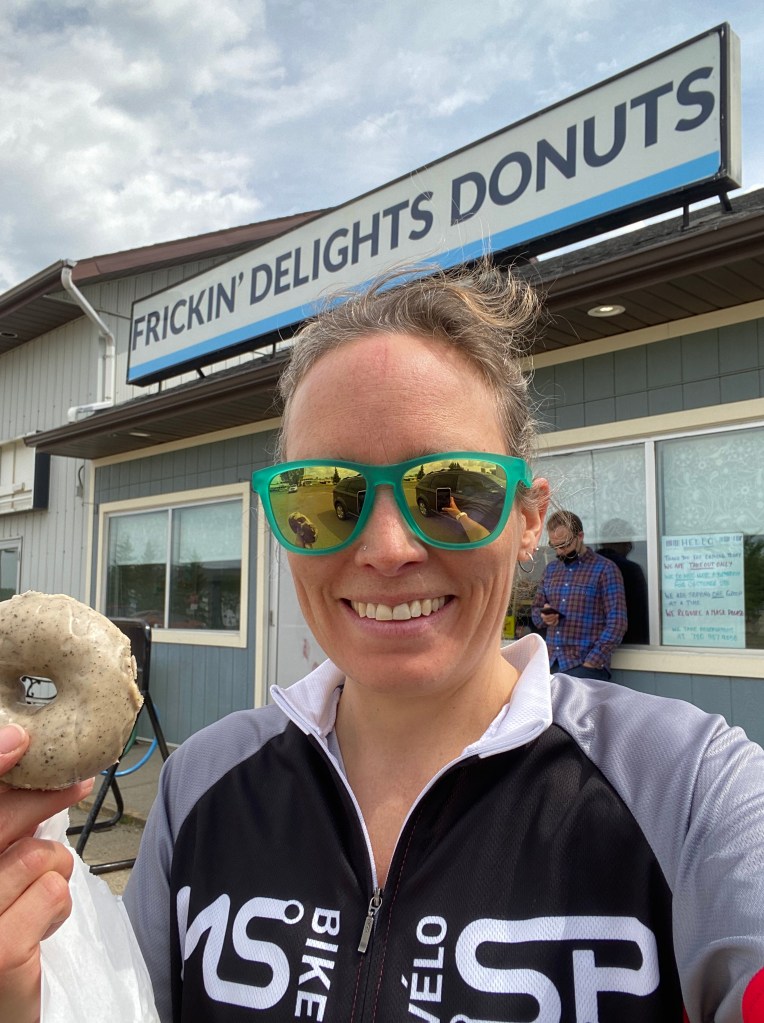
“Having” to do long rides was also a good excuse for some fun adventures. One Friday, I bike-commuted the kids to school, rode to Devon for coffee and a donut with a friend, and then rode back to pick up the kids. I admit I cackled to myself about the privileges sometimes afforded by being a grownup. They’d been in school all day, and I’d spent the whole day cycling in the sun.
I also did multiple amazing rides through the city. I rode from my house, out to the Henday on the north east end of the city via bike paths, and then to the Henday on the south west end of the city and back again in >30 degree Celsius weather (we had to stop 3x to buy more drinks!) I rode to Beaumont to visit my Grandpapa’s grave (riding MS Bike in his memory was how I discovered how much I enjoy cycling). I even rode 36k around a track, very slowly, from the middle of the night until after sunrise, keeping my best adventure buddy Janelle company as she completed her 24-hour Survivorfest event. The worst ride was an early morning one while my mom was visiting, so could be there when the kids woke up, in the wind and the rain. I think that was the only day that was really hard as opposed to uplifting. The other rides were physically challenging, but always still enjoyable.
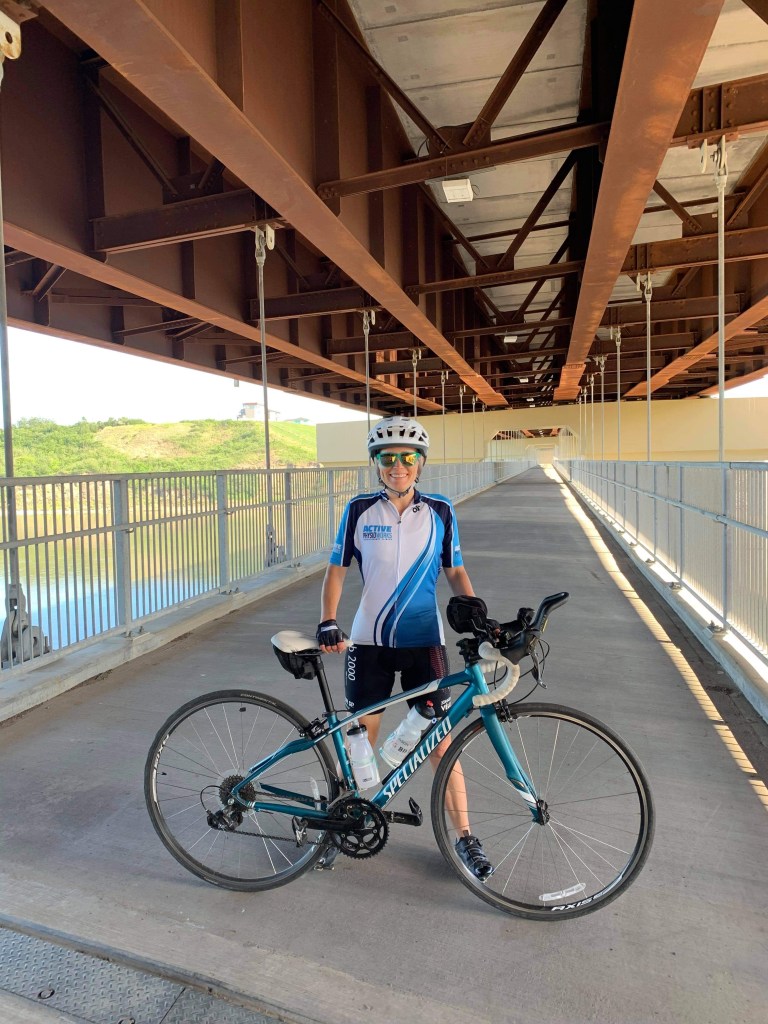

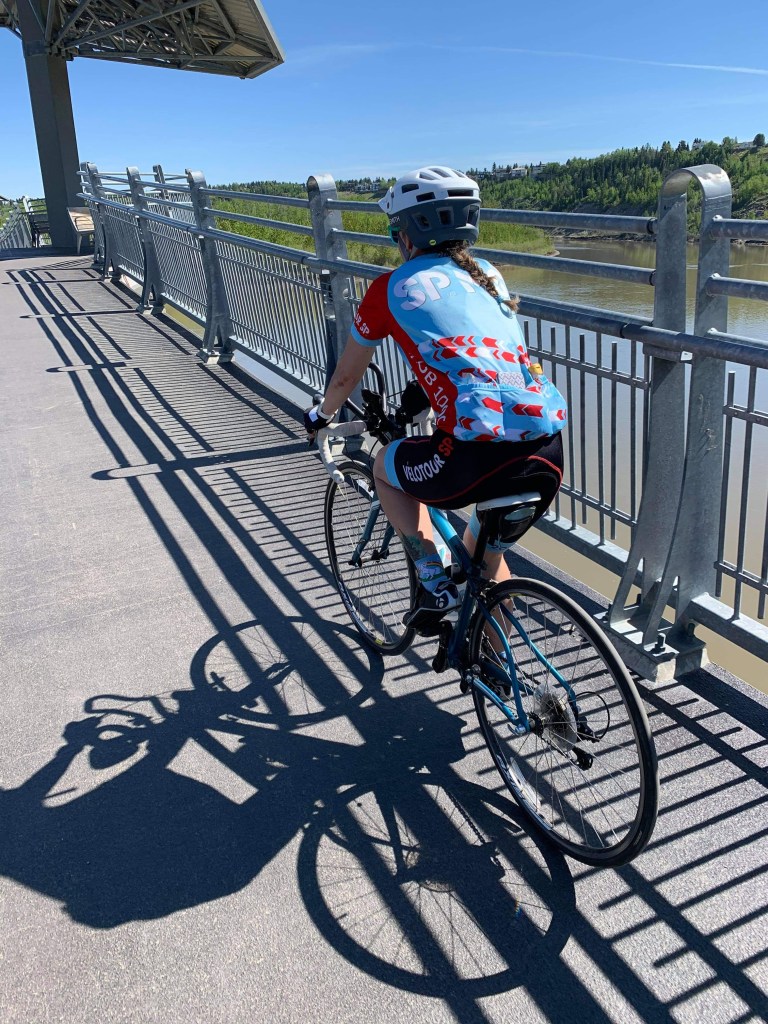
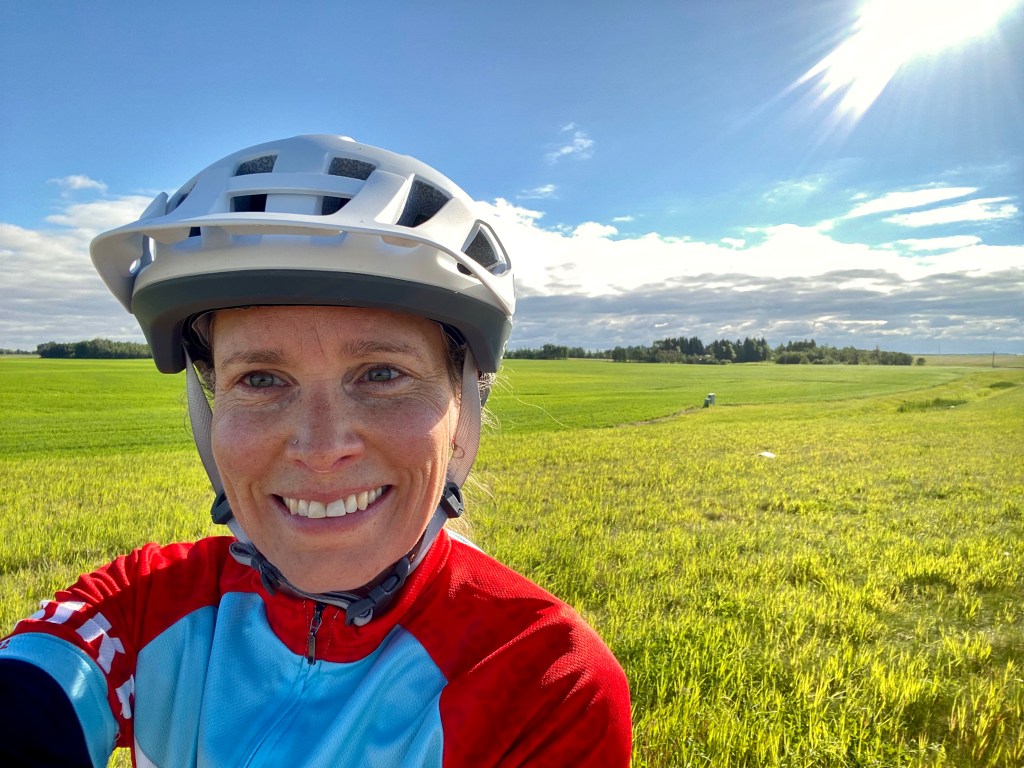
As the end of June approached, I knew I was going to finish the Canadian Crossing. Biking was feeling like a part-time job (it WAS a part-time job, that’s a lot of bike hours) and I was looking forward to being done. But I was also feeling so much better. It made me realize how important it is for me to have something to work towards, focus on, look forward to. It also made me realize that my active lifestyle outside and with friends is a necessary ingredient to my well-being. It turns out that the Virtual Canadian Crossing was the event that would help me survive the pandemic.
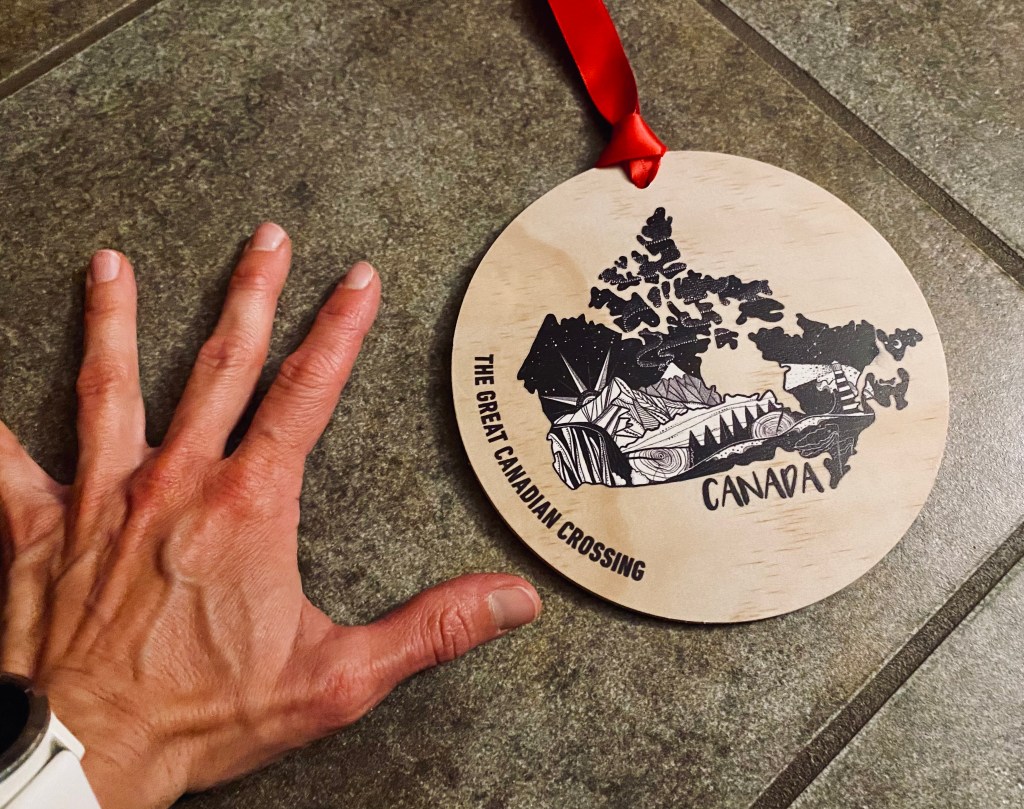
I included my kids on my “victory lap” – the final 6.5km. It was the day after school finished, so I thought they’d be feeling victorious too. They were not as enthusiastic as I’d hoped about going for a bike ride – it was already 25 degrees at 9am that day, but I bribed them with pains au chocolat and they grudgingly agreed. And then, it was done. Virtual finish lines definitely lack fanfare. But awhile later, I got my enormous medal in the mail with a congratulatory note. “You did it!” So what did I do next? I signed up again for this year of course. Some days it feels like pressure to put on some miles, but maybe this is just a good way to stay on top of my mental health. Sometimes, to keep going, all you need is something to focus on.

 "En coeurage et joie"/ In heart, courage and joy
Thank you for sharing!
LikeLike